
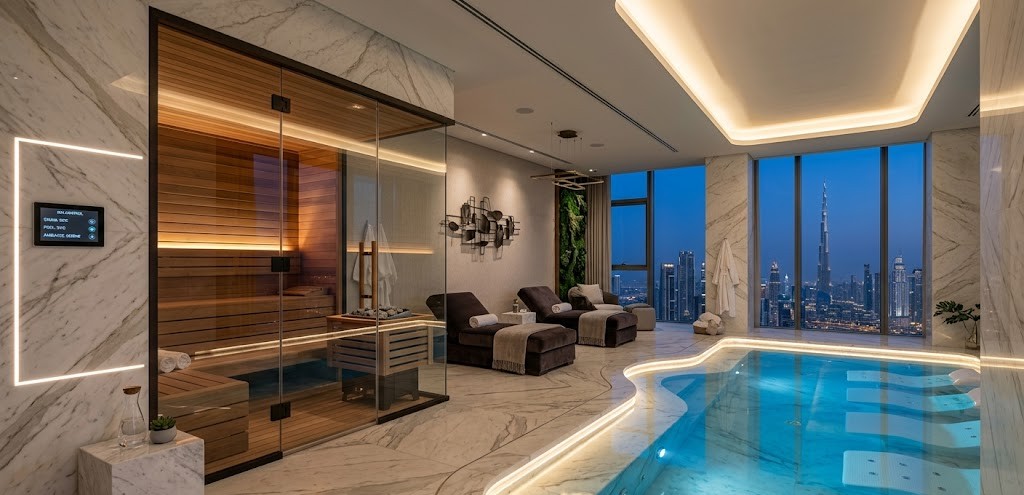

Most people think a home spa is just a fancy bathtub. It is not. A proper spa with sauna interiors design is a carefully planned wellness space. It combines heat, water, relaxation, and smart materials — all in one room. Done right, it adds serious value to your home. Done wrong, it just sits there and costs you money.
At Atlanta Pools, we have built and renovated dozens of private wellness spaces across the UAE. In this guide, we share what actually goes into a great spa and sauna design. We also explain what to avoid, what materials work best, and how to make the most of your space.
What Is a Spa with Sauna Interiors Design?
A spa with sauna is not a single room. It is a combination of spaces that work together. Most setups include a sauna cabin, a plunge pool or cold-water dip area, a relaxation lounge, and sometimes a steam room.
A sauna is a small room heated to between 70°C and 100°C. Regular sauna use is linked to lower blood pressure, better sleep, and muscle recovery. A spa combines this with water therapy, also known as hydrotherapy — the use of water for pain relief and treatment.
When you bring both together in your home, you create something most hotels charge a premium for. And you get to use it every day.
Why the Interior Design Part Matters So Much
A lot of companies will build you a sauna box. That is the easy part. The hard part is making the whole space feel cohesive, luxurious, and easy to use.
Poor spa and sauna interior design leads to:
- Humidity problems that damage walls and ceilings
- Materials that warp or crack under heat
- Bad lighting that makes the space feel clinical, not calming
- Poor layout that wastes space and kills the relaxation experience
Good design solves all of this before the first tile goes down. That is why the interior planning stage is just as important as the construction.
Key Elements of a Great Spa with Sauna Interiors Design
1. Sauna Type and Position
The first decision is what kind of sauna you want. There are three main types:
Finnish dry sauna — This is the classic. It uses dry heat from hot rocks. The temperature goes high, usually 80°C to 100°C. It is the most traditional and most popular type.
Infrared sauna — This uses infrared light panels instead of rocks. The temperature stays lower, around 50°C to 60°C. It heats your body directly without heating the whole room. Great for smaller spaces.
Steam room — This is wet heat, around 40°C to 50°C with 100% humidity. Different from a sauna but often included in a full spa setup.
Where you position the sauna matters. It should sit near the pool or cold-water area so you can move between hot and cold easily. This hot-cold cycle is what delivers the real health benefits.
Our team at Atlanta Pools works through this layout planning as part of every spa, fountains, and water features service we offer. We look at the whole space, not just the sauna box.
2. Materials That Actually Work
Heat and moisture destroy the wrong materials fast. Here is what professional spa and sauna designers use:
Cedar wood — The gold standard for sauna interiors.It does not overheat to the touch. Additionally, it resists warping and moisture. Moreover, it has a natural, clean scent that enhances the overall experience.. Nordic spruce and hemlock are also good choices.
Natural stone and porcelain tiles — These work brilliantly for the wet areas, the shower space, and the relaxation lounge floor. They handle humidity well and look stunning. We offer dedicated floor and wall tiling services to make sure every surface is waterproof and beautifully finished.
Tempered glass — For partitions between the sauna, the pool area, and the lounge. It keeps the space feeling open and airy without letting humidity spread into the wrong areas.
Plaster and cladding finishes — The walls outside the sauna need proper waterproof treatment. Our plaster and cladding service uses finishes that breathe correctly and stay looking clean for years.
Avoid MDF, standard drywall, and low-grade tiles in any spa space. They will fail within months.
3. Lighting Design
Lighting completely changes how a wellness space feels. Harsh overhead lights make it feel like a hospital. Soft, layered lighting makes it feel like a five-star retreat.
For a spa with sauna interior design, think in layers:
- Ambient lighting — soft, indirect light along the ceiling or floor edges
- Task lighting — for reading or using a screen in the lounge area
- Feature lighting — inside the sauna, warm LED strips that give a glow without blinding you
Chromotherapy (colour therapy) lighting in the shower or steam room is a popular addition. It uses different colours to promote different moods. Blue for calm, red for energy, green for balance.
All lighting must be rated for high humidity. Standard fittings will fail quickly in a spa environment.
4. Ventilation and Climate Control
This is the part most homeowners do not think about — until they have a mould problem.
A sauna produces extreme heat. The surrounding spaces produce steam. Without proper airflow, that moisture goes into walls, ceilings, and floors. Within a year, you have damage that costs more to fix than the original build.
Proper ventilation includes:
- A dedicated extraction fan for the steam room
- A heat recovery ventilation (HRV) system for the lounge area
- Insulated walls and ceilings inside the sauna to prevent condensation
- Proper sealing around all door frames and glass panels
When we take on a pool construction and renovation project, ventilation planning is always part of the brief. Especially in the UAE climate, where outdoor humidity can be extreme.
5. The Plunge Pool or Cold-Water Feature
A private spa without a cold-water element is like a gym without weights. You are missing the most important part.
The cold-plunge cycle — where you go from hot sauna to cold water and back — is what drives the circulatory and lymphatic benefits. It improves blood flow, reduces inflammation, and gives you that deep, almost instant relaxation response.
A plunge pool does not need to be large. A compact cold-water dip pool, around 2m x 1.5m, is enough for most home spa setups. It should be chilled to around 10°C to 15°C for best effect.
If space is tight, a cold shower with a rainfall head works as an alternative. But nothing beats the full plunge experience.
Our team specialises in build and installation of these compact wellness water features as part of a complete spa package.
6. The Relaxation Lounge
This space is often overlooked but it is essential. After the sauna and the plunge, the body needs 10 to 20 minutes of quiet rest. This is when most of the recovery happens.
The lounge needs comfortable seating or day beds, soft towels, warm lighting, and if possible, a beverage station. Simple and calming. No TV blaring, no bright lights. Think of a quiet corner in a good spa hotel.
Materials here should still be moisture-resistant. Linen or cotton upholstery, stone or sealed wood flooring, and breathable wall finishes.
Common Mistakes to Avoid
Using the wrong wood inside the sauna — Pine looks fine but it sweats resin under high heat. It can burn if touched. Always use cedar, hemlock, or similar heat-safe woods.
Skipping the drainage plan — Every wet area needs proper drainage. Without it, water pools and causes structural damage. This sounds obvious, but it gets missed on DIY or cut-price builds.
Building without professional waterproofing — The area around a pool or plunge tub needs full waterproof membrane treatment before any tiles go on. We cover this as part of our comprehensive renovation services — contact us to get a proper spec drawn up before you start.
Ignoring maintenance access — Sauna heaters, pool pumps, and ventilation systems all need regular servicing. If you cannot reach them easily, maintenance becomes a nightmare.
How Much Space Do You Actually Need?
A full spa with sauna can work in as little as 20 to 25 square metres. Here is a basic breakdown:
| Space | Minimum Size |
|---|---|
| Finnish sauna cabin | 4–6 sqm |
| Steam room | 3–5 sqm |
| Cold plunge pool | 3–4 sqm |
| Shower area | 2–3 sqm |
| Relaxation lounge | 8–10 sqm |
Compact layouts can overlap some of these areas. For example, the shower can serve double duty as a transition space between the sauna and plunge pool.
If you have a villa in Abu Dhabi or across the UAE, it is very likely you already have the space. It just needs to be planned properly.
Fitting It Into Your Outdoor Space
In the UAE climate, many homeowners choose to build spa and sauna spaces in a covered outdoor area or garden pavilion. This works well because:
- The garden location keeps humidity away from the main living areas
- It creates a true “retreat” feel, separate from the house
- Natural stone and landscaping can be integrated beautifully
We offer hard and soft landscaping services that work around your pool or spa space to create a complete outdoor wellness zone. Planting, lighting, paving — everything designed together so it looks intentional, not pieced together.
Indoor vs Outdoor Spa: Which Is Better?
Both work. The choice depends on your space and your lifestyle.
Indoor spa — More private, usable all year, climate-controlled. Works well in apartments or when you want a standalone wellness room.
Outdoor spa — Connected to the garden and pool, feels more open, great for social use. Works best in villas with covered terraces or garden space.
Many of our clients do both — an indoor sauna and an outdoor plunge pool connected by a covered walkway. It is a small architectural addition but it completely transforms how you use the space.
What to Ask Before Hiring a Contractor
Before you sign anything, ask these questions:
- Do they have experience with both pool construction and spa interior fit-out?
- Can they show finished projects with a similar scope?
- Do they handle ventilation planning, not just the build?
- What waterproofing system do they use behind tiles?
- Is ongoing maintenance included or available?
Atlanta Pools answers yes to all of these. We have been working across Abu Dhabi and the wider UAE for years. We do not subcontract the technical work. Our team handles design, build, tiling, landscaping, and ongoing pool and spa maintenance under one roof.
Ready to Start?
A spa with sauna interiors design is one of the best investments you can make in your home. It improves your health, it adds genuine value to the property, and it gives you something you will actually use every single day.
If you are based in Abu Dhabi or anywhere in the UAE and you want to explore what is possible in your space, get in touch with Atlanta Pools. We offer a free consultation, we walk through your space, and we put together a design brief that fits your budget and your lifestyle.
Explore our full range of services or view our completed projects to see what we have built for clients across the region.
FAQs
How much space do I need to build a home spa with sauna in Abu Dhabi?
Firstly, you do not need a massive villa to have a proper spa and sauna at home. A basic setup with a sauna cabin, a small plunge area, and a shower space can fit into around 15 to 20 square metres. In addition, if you want to add a steam room and a relaxation lounge as well, plan for around 25 to 30 square metres. Moreover, most villas in Abu Dhabi already have a room, a covered outdoor area, or a garden corner that works perfectly. The key is good planning before construction starts — not more space.
What wood is best for a sauna interior in the UAE climate?
Firstly, cedar is the top choice. It handles extreme heat without warping, and it does not get hot enough to burn your skin. In addition, it releases a natural scent that enhances the overall experience. Nordic spruce and hemlock are also solid options. However, you should avoid pine — it sweats resin at high temperatures and feels sticky. The UAE climate adds extra humidity, so wood inside the sauna must be properly kiln-dried before installation. Otherwise, cheap or untreated wood will cause problems within the first year.
Is a plunge pool necessary for a home spa, or can I skip it?
Firstly, you can skip it, however, you will miss most of the health benefits. The hot-cold cycle — moving from a hot sauna to cold water and back — is what drives better blood flow, reduced inflammation, and that deep relaxation you feel after a proper spa session. In contrast, without the cold element, you are really just sweating. A plunge pool does not have to be large. For example, a compact dip pool around 2 metres by 1.5 metres, chilled to 10°C to 15°C, is enough for most homes.
How long does a full spa and sauna renovation take in Abu Dhabi?
Firstly, a straightforward fit-out in an existing room typically takes four to six weeks. However, if you are building from scratch — digging for a plunge pool, adding drainage, and waterproofing from the ground up — expect eight to twelve weeks. Moreover, the design and planning stage at the start is where most of the time gets saved later. If that is done properly, the build goes smoothly. On the other hand, skipping the planning stage almost always causes delays and extra costs during construction.
Share this post: